

Below are some notes on what I talked about in my Facebook post.
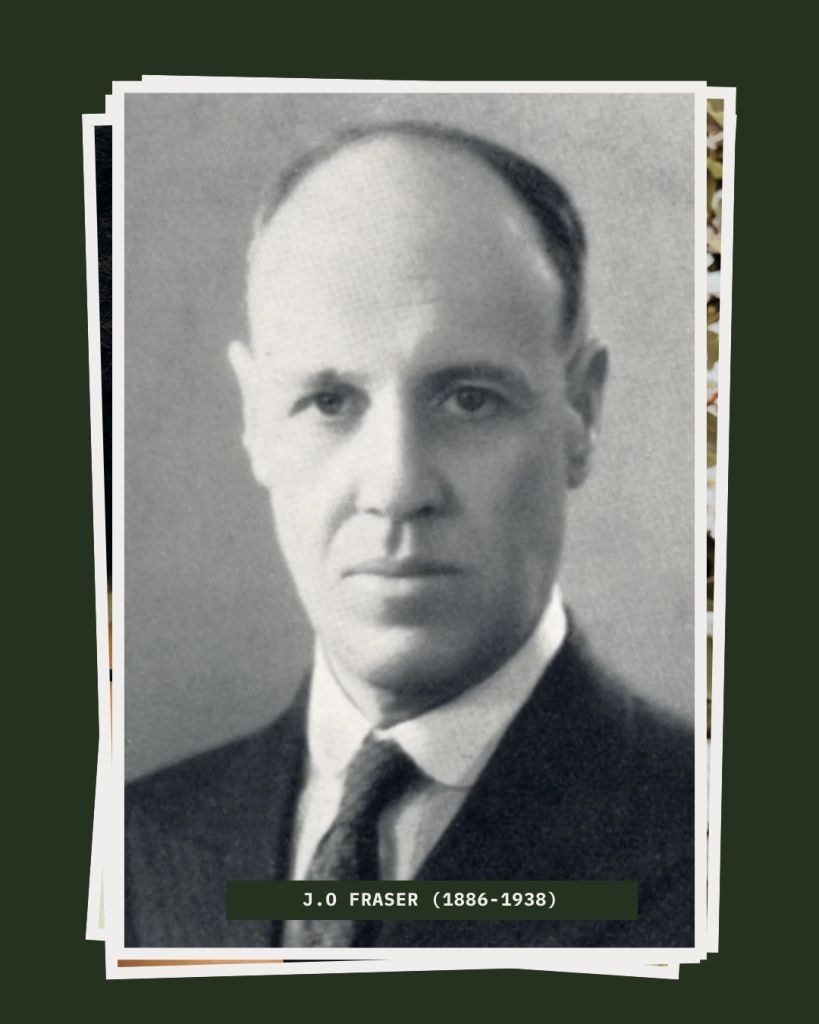
Firstly on J.O. Fraser. Secondly, on the Apostle Paul and the mystery surrounding the first half of Acts chapter 16 – what was going on?
Section 1. J. O. Fraser and the Western Lisu:
“You could hardly miss them. They wore turbans, ornamental sashes and white leggings. The women wore colourful costumes, ornamented with shells and beads. They were the ‘monkey people’, the Chinese said with contempt. They lived perched on the mountains. If local history was correct, however, they were the original inhabitants of much of mainland China, driven south and west by the invaders. Historians estimate that there may have been 30 million of them, divided into 150 tribes, each having its own language or dialect. They had retreated into the mountain fastnesses of Yunnan and neighbouring provinces. Later, after the Communist takeover in 1949, they migrated to Burma and Thailand.
James saw a group of Lisu tribesmen wandering through the marketplace and was immediately interested. Drawing alongside, he tried out his Chinese on them. They did not understand a word. However, he guided them towards the little room in the street he called the preaching hall, and they came gladly. On arrival, they prostrated themselves, knocking their foreheads on the floor repeatedly, overcome with respect for the friendly white-faced stranger. They tried to explain with much gesticulation that they lived six days’ journey away in the mountains, where there were many of their people.
As he made his way back to the little inn afterwards, climbing the narrow stairs to his room, James’ imagination was racing. Might there not be a great turning to God amongst the Western Lisu too? He was surprised at the immediate affection he felt for these people.”
Section 2: Paul in Acts chapters 15 and 16.
Acts 15:36-41 (NKJV): Then after some days Paul said to Barnabas, “Let us now go back and visit our brethren in every city where we have preached the word of the Lord, and see how they are doing.” Now Barnabas was determined to take with them John called Mark. But Paul insisted that they should not take with them the one who had departed from them in Pamphylia, and had not gone with them to the work. Then the contention became so sharp that they parted from one another. And so Barnabas took Mark and sailed to Cyprus; but Paul chose Silas and departed, being commended by the brethren to the grace of God. And he went through Syria and Cilicia, strengthening the churches.
Acts 16:6-11 (NKJV): The Macedonian Call.
Now when they had gone through Phrygia and the region of Galatia, they were forbidden by the Holy Spirit to preach the word in Asia. After they had come to Mysia, they tried to go into Bithynia, but the Spirit did not permit them. So passing by Mysia, they came down to Troas. And a vision appeared to Paul in the night. A man of Macedonia stood and pleaded with him, saying, “Come over to Macedonia and help us.” Now after he had seen the vision, immediately we sought to go to Macedonia, concluding that the Lord had called us to preach the gospel to them.
The Total Distance Covered
When we calculate the approximate distances Paul travelled in this passage alone, we find:
1 Through Phrygia and Galatia: 150-200 miles
2 To the borders of Mysia and attempted entry to Bithynia: 150-200 miles
3 Journey to Troas: 100 miles
4 Sea crossing to Neapolis: 130 miles
This gives us a total of approximately 530-630 miles just for the section described in Acts 16:6-11!
From Asia to Europe: A Theological Turning Point
This delay redirected Paul’s entire missionary strategy. Instead of continuing eastward into Asia, he was led westward into Europe. This shift would have enormous consequences for the spread of the gospel and the future of Christianity. The churches Paul would establish in Philippi, Thessalonica, Berea, and Corinth would become centres from which the gospel would spread throughout the European continent.
This geographic shift represents a pivotal moment in salvation history:
- The gospel moves decisively westward, following the “to the ends of the earth” mandate of Acts 1:8.
- Christianity continues its transformation from a movement within Judaism to a faith that would influence the entire Greco-Roman world. The path God chose took Paul directly into the heart of Roman influence and power, positioning the gospel to spread along established networks.
- The stage is set for Paul’s later ministries in Greece and Rome itself. This redirection brought the gospel to the European continent for the first time. The implications for world history are immeasurable.
Source: “Mountain Rain”, a biography of James O. Fraser, Pioneer Missionary to China, by Eileen Fraser Crossman.